You know how Arkansas winters go. Yesterday felt like spring, and this morning you’re scraping ice off your windshield. If you live around Greers Ferry Lake or Higden, you’ve probably learned not to trust the weather forecast too much. We don’t get buried in snow very often, but those sudden temperature drops are the real problem.
And they’re especially bad news for your pipes.
A burst pipe doesn’t just mean a little water on the floor. We’re talking hundreds of gallons flooding your home every single day until you get it fixed. Insurance might help with the bills, but it won’t undo the chaos of ripping out soggy drywall, replacing ruined floors, or living through weeks of repairs.
The good news is that most frozen pipe disasters are completely preventable. And if something does go wrong, knowing what to do in those first few minutes can save you thousands of dollars in damage.
What Actually Happens When Pipes Freeze
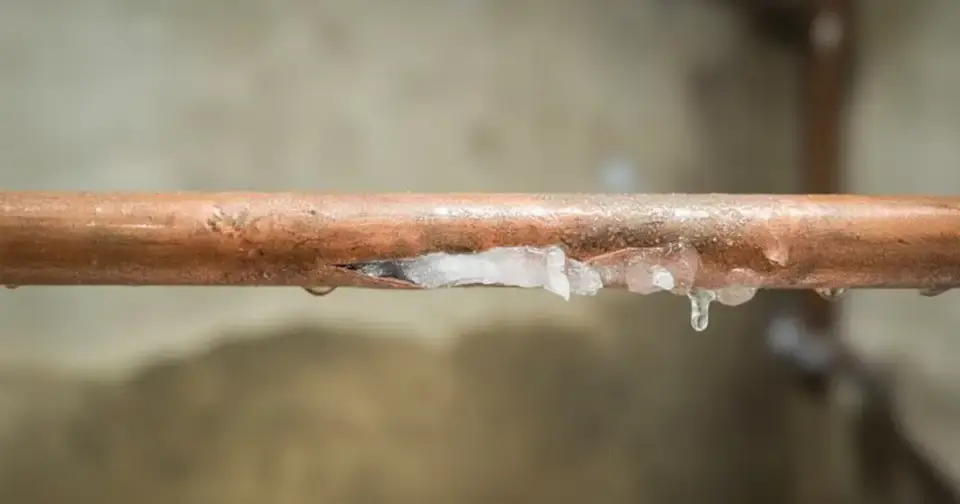
Water freezes at 32 degrees. Simple enough. But here’s what most people don’t realize. It’s not the ice itself that causes the problem. When water turns to ice, it expands and creates massive pressure inside the pipe. That pressure keeps building until something has to give. Usually, that means a crack or a full rupture.
The pipes most likely to freeze are the ones you probably don’t think about much:
- Anything running through your attic or crawl space
- Pipes along exterior walls
- Plumbing in your garage
- That outdoor faucet you forgot to winterize
- Old irrigation lines you haven’t used in months
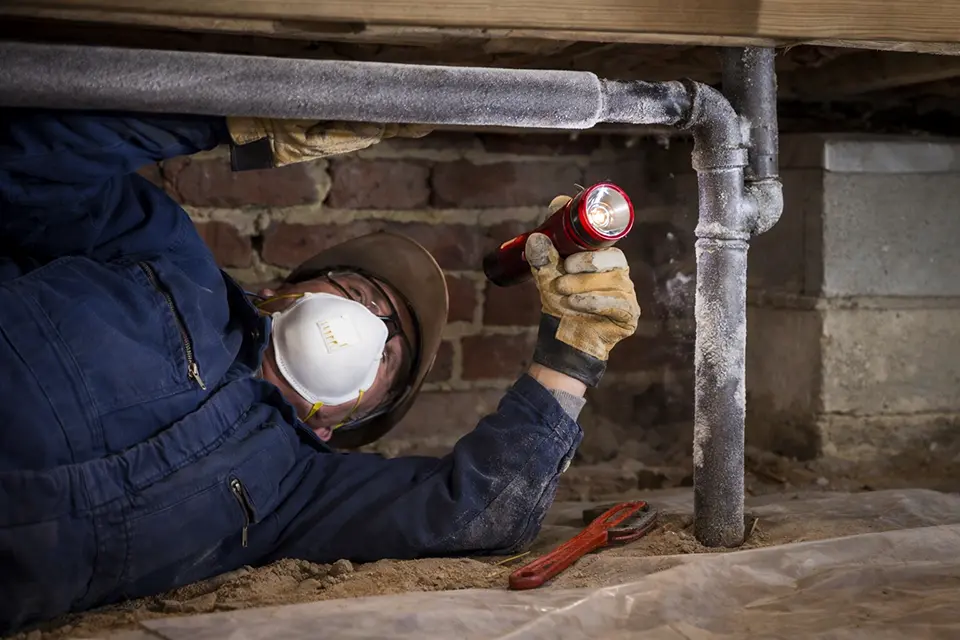
Homes around here often have crawl space foundations, which means a lot of exposed piping underneath. If those spaces aren’t properly sealed or insulated, cold air gets in and turns your plumbing into a ticking time bomb.
Watch for These Warning Signs
Pipes don’t usually burst without giving you some kind of heads-up first. Pay attention to these red flags:
- Water pressure drops suddenly or stops completely
- Weird gurgling or whistling noises coming from your pipes
- A sewer smell near sinks or drains
- Visible frost on exposed pipes
- One part of your house feels noticeably colder than the rest
Catch any of these early, and you’ve got time to fix things before they get expensive.
What to Do When You Find a Frozen Pipe
First, don’t freak out. A frozen pipe doesn’t automatically mean it’s going to burst. You’ve got options.
Open the faucet that connects to the frozen section. This gives the water somewhere to go and helps relieve pressure as things start to thaw.
Now you need to warm up that pipe. A hair dryer works great. So does a heating pad or some towels soaked in warm water. You can also set up a space heater nearby, just keep an eye on it and make sure it’s not too close to anything flammable.
Never use a torch, kerosene heater, or anything with an open flame. You might thaw the pipe, but you could also melt it completely or start a fire.
If the frozen pipe is anywhere near electrical outlets or your breaker panel, stop and call a plumber instead.
When a Pipe Actually Bursts
If a pipe ruptures and water starts flooding your house, take action immediately.
Shut off your main water valve right away. Every second that water keeps flowing is making the damage worse. If water is near any outlets or appliances, shut off power to that area. Open all your faucets inside and outside to drain remaining water from the system.
Start damage control by moving furniture, using towels, or running a wet-dry vacuum if you have one. Take photos of everything for insurance documentation.
Then call a plumber. If you need a referral, Greers Ferry Heat & Air can point you in the right direction.
How to Actually Prevent This Mess
Prevention is far cheaper than repairs. Most of these steps take very little time and cost next to nothing.
- Insulate your pipes: Foam pipe sleeves are inexpensive and easy to install, especially in crawl spaces, attics, and garages.
- Open cabinet doors: Let warm air circulate under sinks during cold nights.
- Let faucets drip: A slow trickle keeps water moving and pressure down.
- Keep your garage closed: Even a slightly warmer space helps protect plumbing.
- Maintain thermostat settings: Keep your home above 55 degrees, even when away.
- Seal drafts: Use caulk or spray foam around windows, doors, and pipe entry points.
- Winterize outdoor faucets: Disconnect hoses, drain sprinklers, and use foam covers.
- Consider heat tape: Ideal for problem areas that freeze repeatedly.
How Your Heating System Fits Into All This
If your furnace fails during a cold snap, your pipes are immediately at risk. A home that cannot maintain heat becomes vulnerable very quickly.
Seasonal HVAC maintenance helps prevent this. A professional inspection checks furnace performance, airflow, and thermostat accuracy while identifying cold spots that could put pipes in danger.
Final Thoughts
Winter weather is already here. Whether you live in the area full-time or are closing up a lake home for the season, now is the time to prepare.
Call Greers Ferry Heat & Air for a winter checkup or furnace tune-up. We help protect your home, improve comfort, and reduce the risk of frozen pipes.
Have questions or need emergency heating service? Contact us today at (501) 825-7295.