
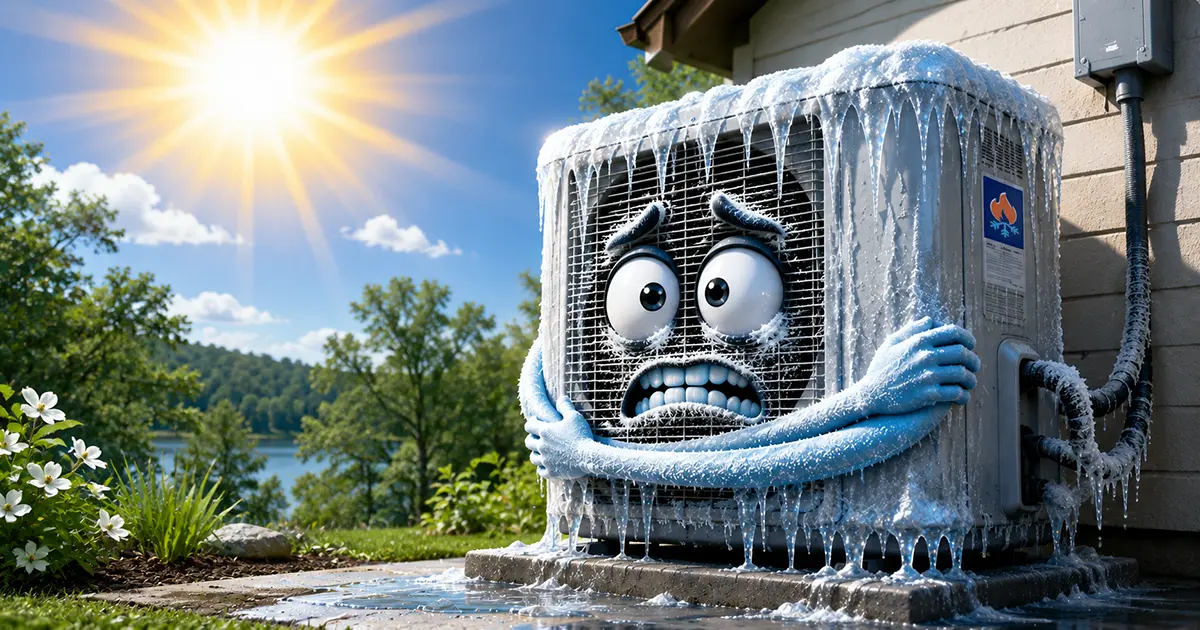
Ice on an air conditioner sounds like a January problem, not something you'd fight through an Arkansas July. Happens more than you'd think, though. The house feels sticky, the AC hums along like it's working, and the air limping out of the vents barely qualifies as cool. You go check the unit and there it is: ice on the refrigerant line, the indoor coil, or wrapped around part of the system itself.
Not a fun thing to find, especially when the heat rolling off Greers Ferry Lake isn't cutting you any slack.
Here's the reassuring part. When an AC freezes up in summer, there's almost always a reason, and finding it doesn't mean your whole system is toast. Sometimes it's as basic as a clogged filter or a vent that got blocked. Other times you're looking at low refrigerant, a dirty evaporator coil, a struggling blower fan, or an older unit that's finally asking for real help.
Either way, it's worth taking seriously. A frozen system strains expensive parts, burns extra energy, and leaves your home miserable right when you need it cool the most.
What a Frozen AC Is Actually Telling You
Your air conditioner doesn't manufacture cold air. It pulls heat out of your indoor air and sends the cooled air back through the house. The evaporator coil does the heavy lifting here. Warm air from your home blows across that cold coil, and the refrigerant inside soaks up the heat.
That warm airflow is doing more than it looks like. It keeps the coil cold enough to cool your house, but not so cold that moisture starts turning to ice.
Knock that balance out and the coil can drop below freezing. Moisture in the air lands on the coil, freezes, and stacks up layer by layer. Once the ice starts, airflow drops even further. The system works harder for less. Your home gets warmer, and the AC keeps running and running without ever catching up.
You'll usually get a warning or two before you spot any ice. Weak airflow from the vents is a common one. The house feeling warmer than the number on the thermostat is another. Maybe you notice the system never seems to shut off. Some homeowners find water pooled around the indoor unit once the ice starts melting. Others spot frost or ice riding along the copper refrigerant line by the outdoor unit.
When that shows up, your AC is waving a flag.
Weak Airflow Is Usually Where It Starts
If there's one thing to check before anything else, it's the air filter. A dirty filter causes more frozen air conditioners than just about any other single thing.
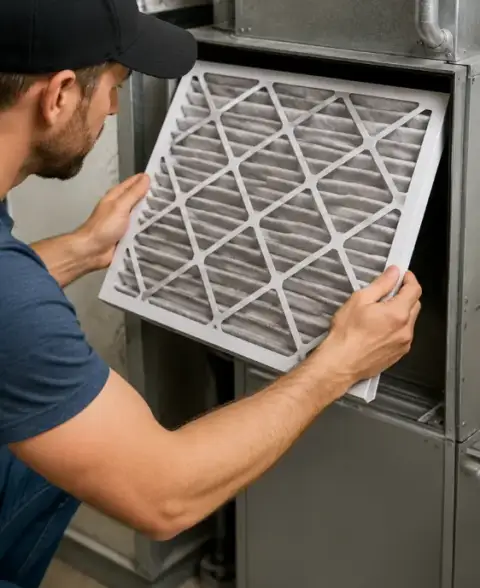
Your system needs air moving through it steadily. Pack that filter with dust, pet hair, pollen, and grime, and the air can't get through the way it's supposed to. Less warm air reaches the evaporator coil, the coil gets colder than it should, and moisture starts freezing.
This is one of those five-minute chores that saves a real repair bill down the road. Around Higdon, Greers Ferry, Fairfield Bay, and the nearby communities, these systems run hard for long stretches all summer. A filter that looked clean a couple weeks ago can load up fast once the unit's running around the clock.
Get in the habit of eyeballing your filter every month during cooling season. Some last longer than others, so the visual check matters more than the calendar. Gray, dusty, clogged? Swap it. Homes with pets, smokers, allergy sufferers, or a lot of foot traffic tend to go through them quicker.
Filters aren't the only airflow culprit. Closed vents cause trouble. So do blocked return grilles, a couch parked over a register, heavy drapes hanging across a vent, or a rug thrown down on top of a floor register. Shutting vents in rooms nobody uses feels harmless, but close off too many and you throw off the system's pressure and choke the airflow across the coil.
A quick lap through the house pays off. Make sure your supply vents are open, give the return vents some room to breathe, and clear away anything blocking the path. Air that moves freely means an AC that cools the way it's meant to.
Low Refrigerant Can Ice the Coil Over
Low refrigerant is another regular offender. Refrigerant is what carries heat out of your home, cycling through the indoor and outdoor parts of the system, grabbing heat inside and dumping it outside.
It doesn't get burned up the way gas disappears from your car, either. If the level's low, you've almost certainly got a leak somewhere.
When refrigerant drops, the pressure inside the system shifts, and that shift can drive the evaporator coil too cold. Moisture freezes on the coil, and pretty soon the thing's caked in ice.
Low refrigerant usually travels with a few other signs. The AC runs forever without hitting the thermostat setting. The air feels mildly cool instead of genuinely cold. You might catch a hissing or bubbling sound near the refrigerant lines. Ice may show up on the indoor coil or on that copper line outside.
This one isn't a weekend project. Refrigerant has to be handled by a trained HVAC technician with the right equipment. Topping it off without tracking down the leak is a band-aid that peels right back off, and it tends to lead to the same problem again and again. A tech can test the system, find the leak, repair it where possible, and recharge the unit properly.
Letting low refrigerant ride gets pricey. The longer the system runs starved, the harder it leans on the compressor, and the compressor is one of the most expensive parts in the whole unit. Catching it early is almost always the cheaper road.
A Dirty Evaporator Coil Makes Everything Harder
The evaporator coil needs clean surface area to pull heat out of the air. Give it enough time and dust and grime settle onto it, especially when filters go too long between changes or the system hasn't seen maintenance in a while.
A dirty coil hits you twice. It blocks airflow, and it insulates the coil from the warm air it's supposed to absorb. The result is a coil that runs too cold and starts freezing.
It sneaks up on you. First the AC just doesn't cool quite like it used to. Then it runs longer. The energy bill creeps up. Eventually the coil ices over.
Changing the filter cuts down on how much dirt reaches the coil, but it won't scrub a coil that's already coated. Once the grime's on there, you're looking at a professional cleaning. That's a big reason annual maintenance earns its keep before the worst of the summer heat lands. A tech can look over the coil, clean it if it needs it, check refrigerant levels, test the airflow, and head off the small stuff before it becomes a broken-down AC on a 95-degree afternoon.
A Clogged Drain Line Adds to the Mess
As your AC cools, it's also pulling moisture out of the indoor air. That water collects and drains off through a condensate line. When the line's clear, you never give it a thought.
Clog it, and you start finding water where water shouldn't be.
Drain lines clog with dirt, algae, mildew, and general gunk. Once water backs up near the indoor unit, it creates moisture problems and can feed into freezing around the coil. Some systems shut themselves down when the drain pan fills. Others keep running until you catch water damage, a musty smell, or cooling that's gone downhill.
If your AC has frozen and you're also seeing water near the indoor unit, the drain line deserves a look. A technician from Greers Ferry Heat & Air can clear the clog and check for whatever else may have caused or worsened the freeze.
Cranking the Thermostat Can Push Too Hard
When the house feels like an oven, dropping the thermostat way down is tempting. We've all done it. You come in after mowing, cooking, or wrestling groceries through the door and setting it to 65 feels like the shortcut to relief.
Trouble is, the thermostat setting doesn't make the AC cool any faster. All it does is tell the system how long to keep running.
If your unit is already fighting poor airflow, a dirty coil, or low refrigerant, a lower setting just speeds the freeze along. The AC runs longer, the coil gets colder, and the ice spreads.
Outdoor temperatures play a part too. A lot of residential air conditioners aren't built to run when it's cool outside. Let the temperature slide near or below 60 degrees with the AC still going and freezing gets a lot more likely. That's not top of mind in the middle of summer, but Arkansas weather can swing hard, especially overnight in the shoulder seasons.
A bad thermostat causes its own headaches. If it misreads the indoor temperature or won't shut the system off cleanly, the AC keeps running far longer than it should. Smart and programmable thermostats help manage run times, but they still need a proper setup and a healthy cooling system behind them to do any good.
A Struggling Blower Fan Chokes the Airflow
The blower fan pushes air across the evaporator coil and out through the ductwork. When it's doing its job, your home gets steady airflow and the coil holds the right temperature range.
Slow that fan down, or let it struggle or quit, and the coil can freeze in a hurry.
Fan trouble traces back to a weak motor, a bad capacitor, a wiring issue, a worn belt on some setups, or a blower assembly caked in dirt. You might notice weak airflow, a rattle, a hum, short cycling, or rooms that never seem to land on the same temperature.
This is another one for a Greers Ferry Heat & Air professional. Our tech can test the motor, the electrical components, and the blower's performance. Guessing at electrical problems gets risky fast, and throwing money at the wrong part just wastes it.
Older Systems Are More Prone to It
Age alone doesn't sentence an AC to replacement, but older units freeze up more often. Motors wear. Coils get dirty or corrode. Refrigerant leaks become more likely. Electrical parts weaken. Efficiency slips.
Freeze up once because of a dirty filter and you've got an easy fix. Freeze up over and over and you're telling a different story.
Repeat freeze-ups can point toward a system that needs repair, a deep cleaning, duct improvements, or a full replacement. A unit pushing 10 years or more that needs frequent repairs and can't keep up with the heat is probably costing you more than it should.
Replacement isn't automatically the answer, though. A newer system with a minor airflow hiccup might just need maintenance. An older one with a major refrigerant leak or a failing compressor may not be worth another dime. A professional inspection gives you the real picture, so you're deciding on the condition of the equipment instead of a guess.
What to Do When You Find Ice
Spot ice on your air conditioner and the first move is simple: shut the cooling off. Letting it keep running only builds more ice and piles strain onto the compressor.
Set the thermostat to off for cooling. If it has a fan-only mode, turn the fan on. That moves warmer air across the frozen coil and helps it thaw faster. Replace the filter if it's dirty. Walk the house and make sure the vents and returns are open and clear.
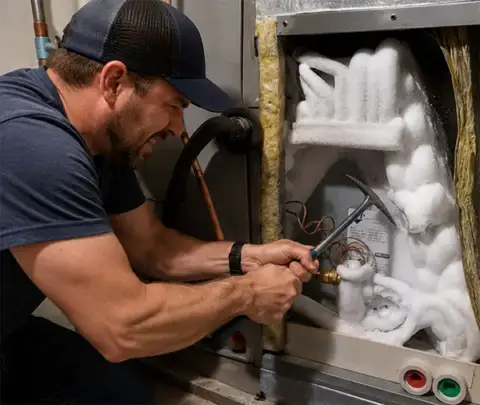
Don't go after the ice with a screwdriver, knife, hammer, or anything sharp. It's easy to nick a coil, a refrigerant line, or another part, and a small puncture can turn a manageable repair into a big one.
Let the system thaw all the way out. Depending on how much ice built up, that can take a few hours or most of the day. Water will show up as it melts, so keep an eye around the indoor unit. If it's pooling or leaking somewhere it shouldn't, shut the system down and call us for help.
Once the ice is gone, the AC may run fine again if the cause was nothing more than a clogged filter or a blocked vent. If it freezes right back up, blows weak air, makes odd noises, or can't hold a temperature, get service scheduled. Ice that keeps coming back means the root cause is still sitting there.
Keeping It From Freezing in the First Place
Heading off a freeze beats dealing with one on a hot afternoon every time. A few habits go a long way toward protecting your comfort and your wallet.
Check the filter often through the summer. Keep the vents open and clear. Don't let furniture or storage crowd the return grilles. Keep the outdoor unit free of leaves, grass clippings, and debris. Pay attention when the airflow, humidity, noise, or cooling starts to change on you.
Annual maintenance is one of the surest ways to keep an AC from icing over. During a tune-up, Greers Ferry Heat & Air will check refrigerant levels, clean the key components, test the electrical parts, look over the blower, clear the drain line, and make sure the system's ready for a hard summer. For homeowners around Higdon , spring is the sweet spot for it, catching problems before the long cooling season starts leaning on the system.
A frozen AC is usually a symptom, not the actual problem. Figure out what caused the ice and you can fix the real issue and keep it from circling back.
Final Thoughts
A frozen air conditioner can wreck an ordinary summer day fast. Maybe the house won't cool. Maybe the unit keeps running and getting nowhere. Maybe you saw the ice and knew something was off but had no clue where to begin.
Greers Ferry Heat & Air gets cooling systems back on track for homeowners in the Higden, Arkansas, communities. Whether your AC needs a filter and airflow check, a coil cleaning, a refrigerant leak repair, fan service, a cleared drain line, or a full system evaluation, a trained technician can pin down the cause and walk you through the best next step.
If your AC is freezing up this summer, don't keep forcing it to run. Shut the cooling off, check the filter and vents, then call Greers Ferry Heat & Air at (501) 825-7295 for dependable AC repair and maintenance. A cooler, more comfortable home starts with getting your system the help it's asking for.