
When summer temperatures push into the 90s, a lot of homeowners do the same thing. They crank the thermostat way down and wait for relief. It feels right. Hotter outside means colder settings should cool the house faster. Air conditioners just don't work that way.
The HVAC industry's 20-degree rule gives homeowners a realistic picture of what their air conditioner can actually pull off without straining itself. Stick to it and you'll stay more comfortable, spend less on energy, and likely add years to your cooling system's life.
What the 20-Degree Rule Actually Means
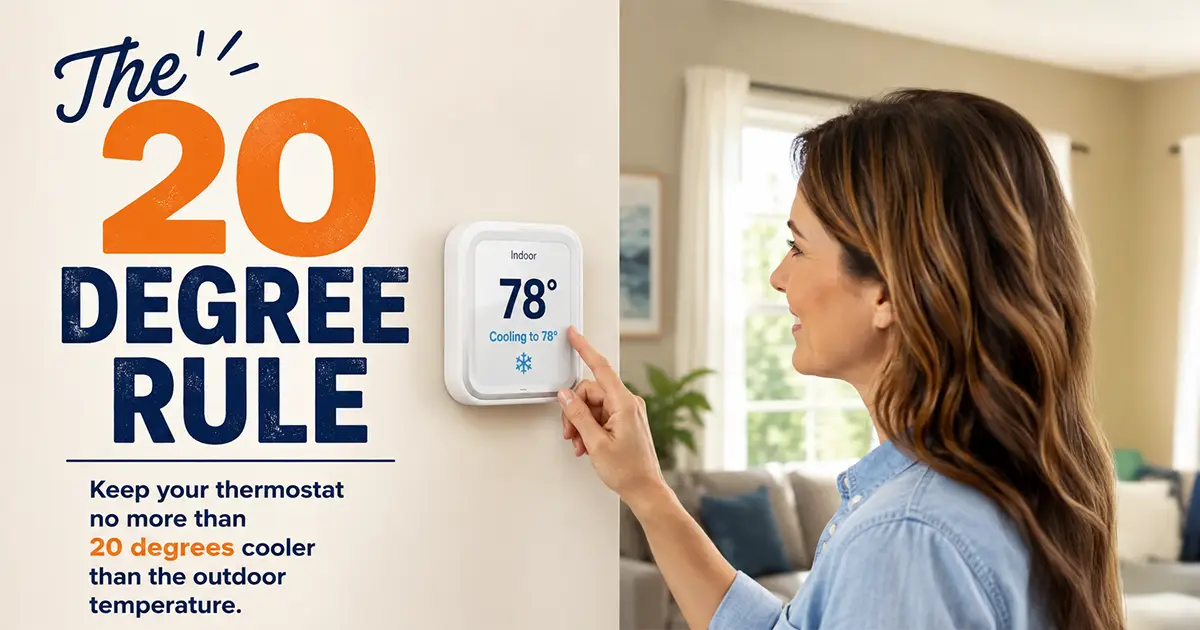
The rule is simple: don't set your thermostat more than 20 degrees below the outdoor temperature. When it's 95°F outside, aim for something around 75°F indoors. When the heat climbs to 100°F, a setting closer to 80°F makes more sense.
Homeowners often panic when the house won't drop into the upper 60s during a heatwave. Most of the time, nothing is wrong. The air conditioner is doing exactly what it was built to do, running right inside its design limits.
Why Your AC Has a Ceiling
Residential air conditioners are built to pull a set amount of heat out of your home over a given stretch of time. Under normal conditions, air moving through the system gets cooled by roughly 16 to 22 degrees before it returns to your rooms.
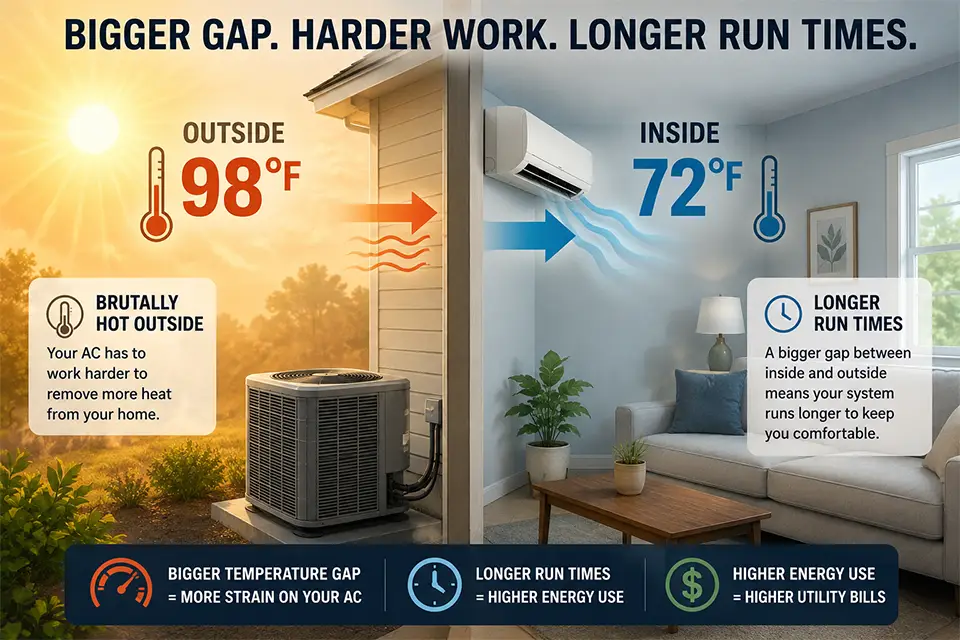
That works well when indoor and outdoor temperatures stay reasonable. Once it gets brutally hot outside, the system has to fight harder to hold a low indoor number. A bigger gap between inside and outside means longer run times.
People sometimes mix up the 20-degree rule with a measurement called Delta-T. Delta-T tracks the temperature difference between the air going into the system and the air coming out of your supply vents. The 20-degree rule looks at something else entirely: the gap between outdoor and indoor temperatures.
So Is It a Hard Limit?
Not really.
A healthy air conditioner can sometimes beat the 20-degree guideline. The catch is efficiency. Push the system past that range day after day and it runs far longer than it should, burning through energy and grinding down the parts that matter most.
Treat the rule as a marker for smart operation, not a wall your system can never cross.
What Happens If You Ignore It
The first thing you'll notice is an air conditioner that never seems to shut off. During a serious heatwave, a system chasing a temperature far below what's outside can run for hours and still miss the mark.
All that nonstop running brings its own problems:
- Higher monthly utility bills
- Extra wear on motors and compressors
- More frequent repair calls
- A shorter overall lifespan for the equipment
- Weaker humidity control inside your home
Here's what surprises most people. Dropping the thermostat way down doesn't cool the house any faster. Air conditioners cool at a steady pace. Setting it to 65°F instead of 75°F just keeps the system running longer to get there.
Signs Your AC Is Working Too Hard
An overworked air conditioner usually drops hints before it quits on you. Keep an eye out for:
- Running almost constantly throughout the day
- Rooms that feel warmer or cooler than others
- Energy bills creeping upward
- Sticky, humid air indoors
- Short cycling, where the unit turns on and off rapidly
- Rattling, buzzing, or grinding noises
When these show up regularly, it's time to call Greers Ferry Heat & Air so we can take a look.
Easy Ways to Cool Off Without Touching the Thermostat
You can feel cooler without dragging that number down.
Ceiling fans are about the simplest fix there is. In summer, the blades should spin counterclockwise so they push air down and create that pleasant breeze against your skin.
Blocking sunlight helps more than you'd think. Pull the blinds, curtains, or thermal drapes during the hottest stretch of the afternoon and you cut down on solar heat sneaking through your windows, which lets your AC hold its ground with less effort.
Watch your indoor heat sources too. Run the oven, dishwasher, and dryer in the evening instead of the middle of the afternoon, and you'll keep the house from heating itself up.
Don't Forget About Humidity
Moisture in the air shapes how a room feels more than most people realize. A house sitting at 78°F with low humidity often feels cooler than one at 75°F with sticky, damp air.
A dehumidifier pulls that extra moisture out, so rooms feel cooler without you ever lowering the thermostat. As a bonus, it takes some pressure off your air conditioner and makes the whole house more comfortable.
Smart Thermostats Earn Their Keep
A smart thermostat makes balancing comfort and savings a lot easier. These devices adjust on their own based on who's home, your daily routine, and your habits.
Plenty of homeowners let the temperature drift up while they're out, then have the house back to a comfortable setting right before they walk in the door. You save energy and never notice the difference.
Final Thoughts
If your air conditioner can't hold a reasonable indoor temperature, starts making strange noises, leaks water, or sends your utility bill through the roof, it's time to bring in a technician. When you call Greers Ferry Heat & air, we can get you signed up for regular maintenance, clean filters, and routine inspections keep the system running at its best all season long.
The 20-degree rule is still one of the easiest ways to understand how your air conditioner is meant to perform. Keep your expectations grounded during extreme heat and you'll spend less, wear out your equipment more slowly, and get more reliable cooling year after year.
When the temperature really soars, pairing sensible thermostat settings with ceiling fans, humidity control, solid insulation, and regular maintenance beats knocking the thermostat down another few degrees every time.